The first thing I found was a box labeled "TRUCK STUFF" in my handwriting. It contained a bicycle pump, two extension cords, a cassette tape and the owner's manual for a car we sold before Garrett was born. That set the tone for the next two Saturdays.
Our garage is a detached two-car with a concrete floor, no heat and, until this month, a single bulb hanging in the middle. When we bought the Silverado in 2019, it turned out to be too long to fit inside with the door shut, so it lives on the driveway. That meant one bay of the garage became a place where things went to be forgotten. Bikes nobody rode, a broken lawn mower, paint cans, three coolers, Lainey's old play kitchen and an exercise bike that was exactly as useful in the garage as it had been in the basement.
What finally pushed me was the water pump on the truck earlier this month. That went to the shop, but it made me think about the Sienna jobs coming in the fall and winter, and about Garrett's first car, which is somewhere out there waiting for us. I want to be able to pull a car inside, shut the door and work on it without moving three bicycles first.
Saturday one: everything out
I took the advice I'd give anyone moving a household: empty it completely. Every item went onto the driveway in three piles: keep, donate, haul. Tina came out at ten with coffee and acted as the appeals judge. Garrett was the labor force. Rusty moved his blanket to the shade of the truck and watched.
The rule for the haul pile was simple. If nobody could name the last time they used it, and it wasn't a tool, it went. A few things got through anyway. Tina saved the play kitchen for a cousin's kids. I saved a coffee can of random bolts, which I'm told is a disease.
The haul pile filled the bed of the truck twice. The landfill north of town charged us $40 for both loads, which covers the dead mower, the exercise bike, old paint that had dried solid, broken lawn chairs and a lot of cardboard. Liquid paint and used motor oil don't go in the landfill, so the half-full cans went to a household hazardous waste drop-off and the old oil from a jug I'd forgotten about went back to the parts store.
Saturday two: walls and light
The second Saturday was about putting things back in a way that leaves the floor clear. The biggest change was a pegboard wall behind the workbench. Here's what I spent:
- Two 4-by-8 sheets of pegboard, furring strips and screws: $46
- A kit of pegboard hooks: $18
- Two 4-foot LED shop lights: $58 for the pair
- Two heavy-duty wall hooks for the bikes: $12
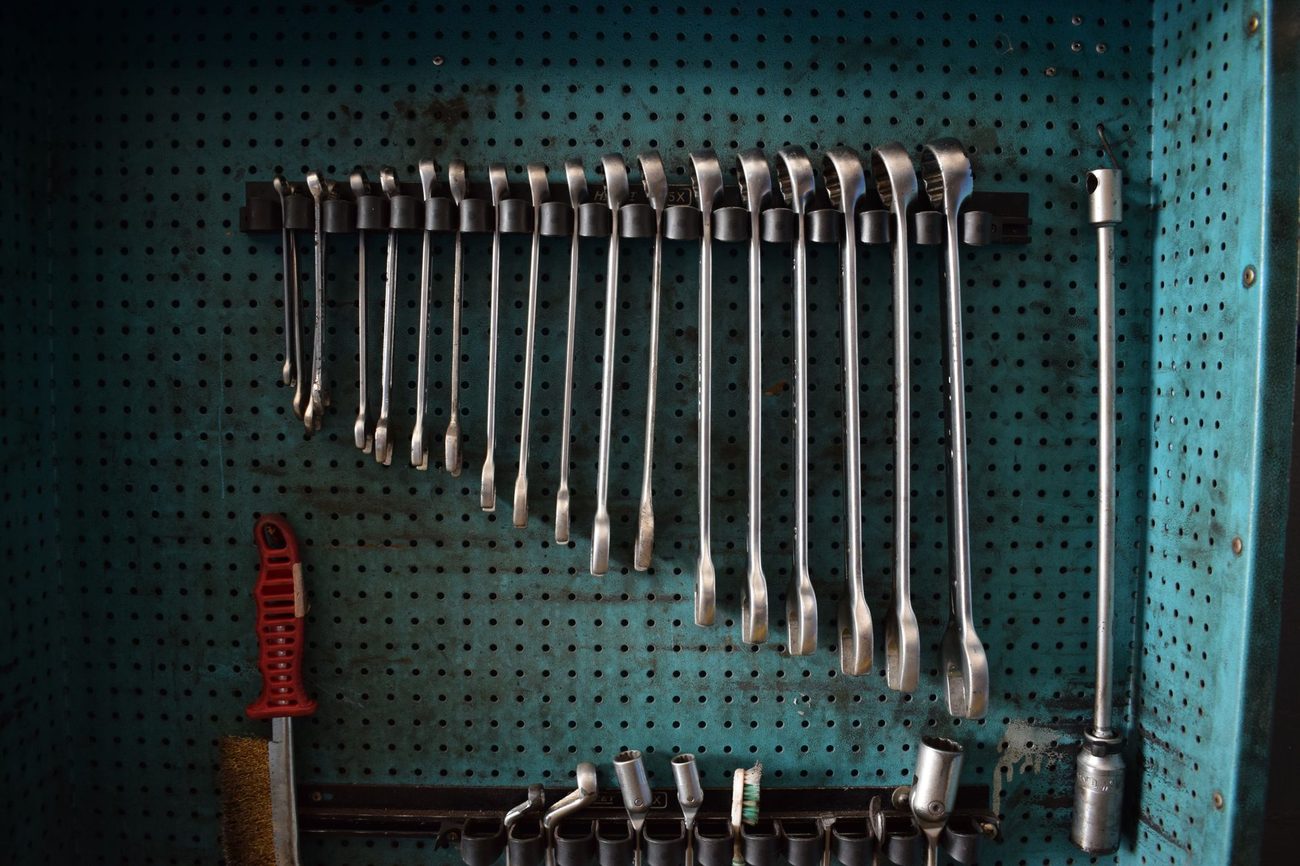
The pegboard went up on furring strips so there's a gap behind it for the hooks. Every hand tool that used to live in a pile on the workbench now has a spot, and I traced the outlines with a marker so I'll know what's missing. The 2004 Craftsman rolling tool chest went at the end of the bench, the floor jack and both pairs of jack stands went against the back wall, and the drain pan lives under the bench where I can slide it out.
The shop lights made the biggest difference. I'd been working under one bulb and a flashlight in my teeth for years. With two LEDs plugged into the ceiling outlet, I can see the bottom of the car without a headlamp. Garrett said it looked like a real garage now. I chose to take that as a compliment.
The result
I pulled the Sienna into the empty bay on Sunday, shut the door and walked all the way around it with room to spare on both sides. There's space to roll the jack in from the front and slide in on a creeper. The bikes hang on the wall, the coolers are stacked on a shelf and the second bay is clear enough for another car, which we're going to need before long.
Total cost: $134 plus the $40 landfill fee, and two Saturdays. The bigger cost was the argument over the exercise bike, which I won and will be reminded of when I'm trying to get in shape next January.
One thing I'd tell anyone doing this: before you put anything back, sweep and check the floor for oil stains. Ours had a big one under where the old lawn mower sat. It wasn't from a car, so nobody's in trouble.