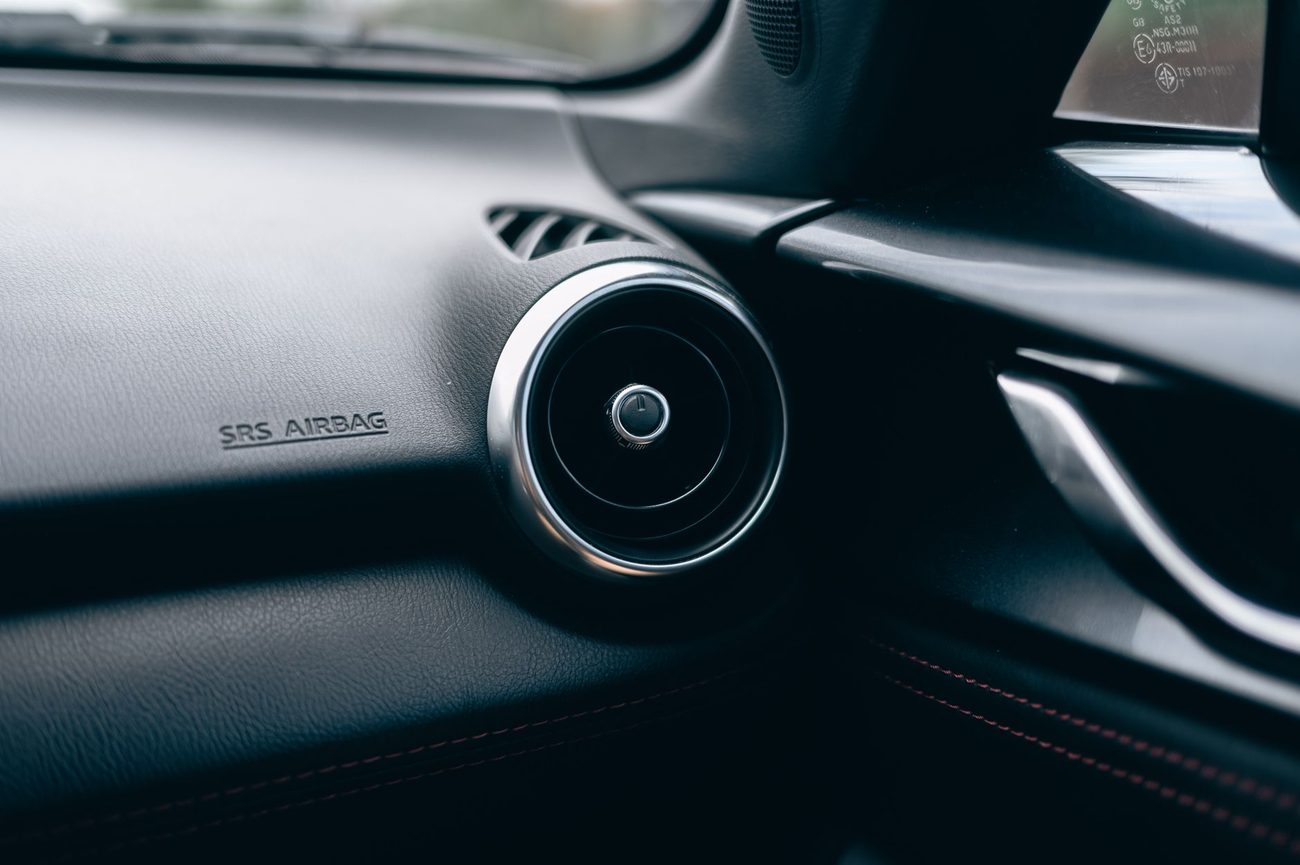
The bank sign on the Belt Highway said 93 degrees on Saturday, June 7, and the air coming out of the Sienna's vents was about the same temperature as the air outside. Lainey was in the back seat holding her volleyball bag over her face for shade. Tina had the windows down and her hair was not happy about it.
It had been fading for a week or so. Cool in the morning, lukewarm by afternoon, and then on that Saturday it gave up completely. When I stood next to the engine with the AC on, I could hear a grinding hum from the compressor, the pump that squeezes the refrigerant, and the clutch on the front of it wasn't staying engaged. At about 190,000 miles, the original compressor had done its time.
Why this one went to the shop
I do a fair amount myself, but there's a short list of jobs I hand over without arguing, and air conditioning is at the top of it. Here's my reasoning, for whatever it's worth from a guy who isn't a mechanic.
First, the refrigerant. An AC system is sealed and pressurized, and the refrigerant has to be recovered with a proper machine before anything gets opened up. You can't legally just let it go into the air, and the equipment to recover it, pull a vacuum on the system and recharge it by weight costs more than I'd ever get back out of using it. The cans of recharge sold at the parts store are fine for topping off a system that's a little low. They don't fix a dead compressor, and adding refrigerant to a system with a failing pump just makes a more expensive mess.
Second, when a compressor fails, bits of it can go through the rest of the system. A shop that does this every week knows whether to flush lines, replace the drier, or replace the expansion valve along with it. I'd be guessing. The Sienna also has rear air, so there's more line and more refrigerant than on a smaller car.
Third, the van is Tina's daily car and Lainey's volleyball bus. It couldn't sit in the driveway for two weekends while I watched videos and ordered the wrong part.
The bill
Our shop on the south side got it in on Monday and had it back to us Tuesday afternoon. The total was $1,140. Here's how it broke down, rounded to the dollar:
- Remanufactured compressor with clutch: $512
- Drier/desiccant cartridge: $36
- O-rings, seals and compressor oil: $22
- Evacuate and recharge with refrigerant: $95
- Labor, 3.5 hours at $125: $438
- Shop supplies: $12
- Sales tax on parts: $25
I'd gotten one other quote over the phone for about $1,380 with a new compressor instead of a remanufactured one. Our shop said the reman units they use come with a warranty they've had good luck with, and the van isn't a car where I'm paying for parts that will outlive it.
The service writer also pointed out that the condenser in front of the radiator was in decent shape, which mattered. If it had been clogged with junk from the old compressor, that's another few hundred dollars. I asked him to show me, and he did. I appreciate a shop that shows you instead of just telling you.
Was it worth it on a van this old?
That's the question I asked myself standing at the counter. The van was worth maybe $5,500 that day. Spending a fifth of that on comfort feels like a lot until you've spent a July in northwest Missouri. It's not just comfort, either. Humid heat in a car makes everybody short-tempered, and Tina drives that van every single day.
The way I look at it, $1,140 spread over the rest of this summer and the next two comes to about $380 per summer, or roughly $76 a month for the five months a year we actually run the AC around here. A replacement van would be a payment far bigger than that every month of the year. So the arithmetic said fix it.
It went in the notebook with the date and mileage, and into the spreadsheet under its own row. The vents blew 41 degrees on the drive home, according to the cheap thermometer I stuck in one. Lainey took the volleyball bag off her face and asked if we could stop for ice cream to celebrate. We did not.