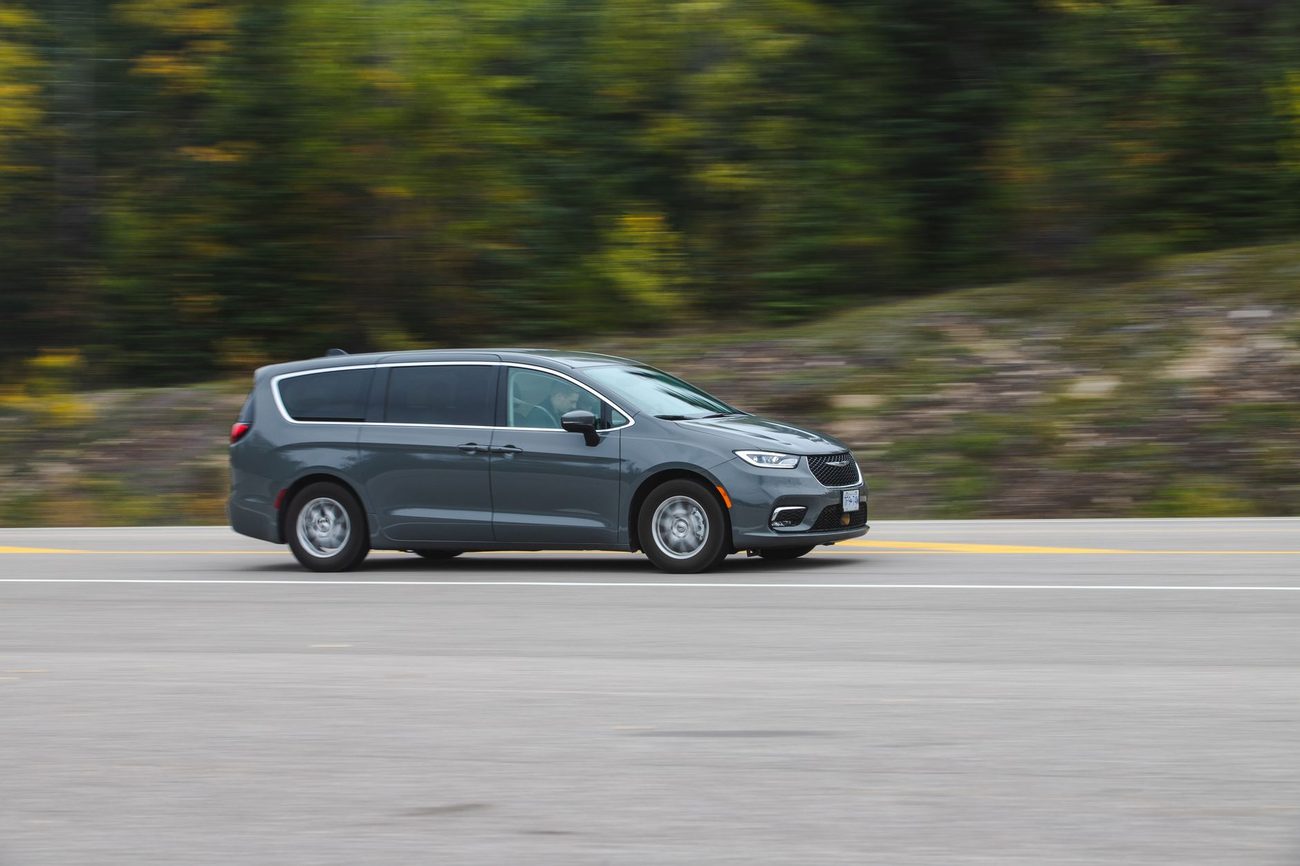
On the drive home from Lake of the Ozarks, somewhere around the four-hour mark, the Sienna's rear passenger door made a noise I had not heard before. It was a sort of tired click. Lainey said, "The van is sighing." Tina looked at me. I looked at the road. That was June 14. By June 20, I had a spreadsheet tab called "Next Van."
The Sienna has about 202,500 miles on it now. It's a 2011 we bought in 2016, it hit 200,000 in March with a cake, and it still does what we ask. But it's going to stop doing that at some point, and I wanted to know what the replacement would actually cost before I need one in a hurry.
Where I looked
Three lots: one in St. Joseph off the Belt Highway and two in Kansas City, where the bigger dealer lots are. I also browsed private listings, but there aren't many late-model minivans sold by owners around here, and the ones there are tend to go fast. I stuck with 2019 and 2020 model years, because those are new enough to have modern safety equipment and old enough that somebody else paid for the first big drop in value.
I looked at Siennas, Odysseys and a couple of Pacificas. Mileage ran 45,000 to 85,000.
The sticker prices
- 2019 vans, 65,000 to 85,000 miles: $24,000 to $26,500
- 2020 vans, 45,000 to 70,000 miles: $26,500 to $29,000
- Well-equipped trims with leather and the bigger screen: the top of that range or over it
Those are the numbers on the window. They are not what you pay.
I asked one salesman in Kansas City for an out-the-door number on a 2019 Sienna listed at $25,900. He was happy to give it to me, which I appreciated. Rough breakdown:
Sale price $25,900. A dealer documentation fee of a few hundred dollars. Then Missouri sales tax, state and local, which you pay at the license office when you title it, not at the dealer, and on a $26,000 van that's a little over two thousand dollars around here. Title, registration and plates on top of that. Call it $28,500 to drive away, and that's before the extended warranty, the paint protection and the nitrogen in the tires, all of which I was offered and turned down in the first six minutes.
Then there's insurance. Right now we carry liability and comprehensive on the Sienna but dropped collision in April, because the van is worth about $4,800. On a $26,000 van I'd want full coverage again. I didn't get a real quote, but even a few hundred dollars more every six months adds up when you've already got a 16-year-old on the policy.
Why we closed the laptop
If we financed $26,000 over five years, the payment would land somewhere around $500 a month, give or take, depending on the rate. Our rule since Garrett's car has been: no payments if we can help it. So the question isn't really "can we afford a payment." It's "how fast can we save $25,000 or so, and how long can the Sienna last while we do?"
I ran the Sienna's last fifteen months of repair bills: front brakes I did myself ($142), the AC compressor last June ($1,140), a sliding door cable ($86) and a battery in January ($164). That's $1,532, or about $102 a month. Even if I double that for a 200,000-mile van, it's $200 a month. A payment would be two and a half times that, plus the bigger insurance bill, plus tax we'd pay all at once.
Tina said, "So we keep the van until it actually breaks." Not quite. We keep the van until it gets expensive in a way I can see coming, and we start saving now so that when it does, we're not standing on a lot in Kansas City at 8 p.m. with no leverage.
I closed the laptop. Then I opened it back up and added a column to the spreadsheet for a car fund. I'll write about the details once we've worked out where the money comes from. For now, the van sighs, and we listen.